
Scan your plate: Tracking food from farm to fork
Local sensors and blockchain reporting can help shoppers see exactly where their food comes from.
Every trip to the supermarket comes with a flood of promises; labels shout ‘organic,’ ‘not genetically modified (non GMO)’ or ‘sustainably grown.’ But how can we be sure where our food really comes from?
Much as we want to believe the claims, today’s supply chains span multiple regions and countries, making it hard to verify what’s really in our basket. To allay buyer concern and improve transparency, researchers from Khalifa University, working with international partners, have proposed a technology framework to track food from seed to shelf.
“Consumers want to know exactly where their food comes from and how it’s produced. In addition, mislabeling, food fraud, unsafe pesticide use and confusing sustainability claims have created a trust gap between producers, retailers and buyers,” explains Haya Hasan, a blockchain specialist at Khalifa. “We have a new approach that can bring more clarity and help restore trust in the food system.”
Cultivating trust
The researchers combined two powerful technologies: Internet of Things (IoT) sensors and blockchain, a secure digital ledger that records information in a way that cannot be tampered with. Low-powered IoT devices installed in fields and storage facilities collect real-time data on soil nutrients, humidity, temperature and water use. This helps farmers manage resources efficiently. For example, producers can track fertilizer use, water consumption and carbon emissions to optimize resources and support the credibility of their eco-friendly claims.
“Blockchain and IoT can reduce fraud and restore trust in food labels, while promoting responsible and sustainable farming practices.”
Ahmad Musamih
The collected data is then stored on a blockchain, which acts as a digital passport for the food throughout its journey. Farmers contribute to the system by providing supporting evidence, such as photos, reports and data logs, creating a clear and transparent record of their work. For example, they can show their interventions to correct soil imbalances or manage pest outbreaks. Certification bodies, including organic and non-GMO authorities, can rely on the information stored on the blockchain to issue labels.
“Blockchain and IoT can reduce fraud and restore trust in food labels, while promoting responsible and sustainable farming practices,” says systems engineer Ahmad Musamih.
A digital journey
At the heart of the system are four automated programs known as smart contracts. These run automatically on the blockchain when specific conditions are met. The first ensures that only verified participants, including farmers, agritech companies and certification authorities, can interact with the system. Another program oversees the planting and farming process, maintains transparency, and keeps all stakeholders informed.
A third program manages requests for organic, non-GMO or Good Agricultural Practices (GAP) certifications. It logs these applications in the blockchain, where certification authorities review them in a secure, tamper-proof process. Finally, the fourth program tracks the delivery of harvested produce from farms to retailer shelves.
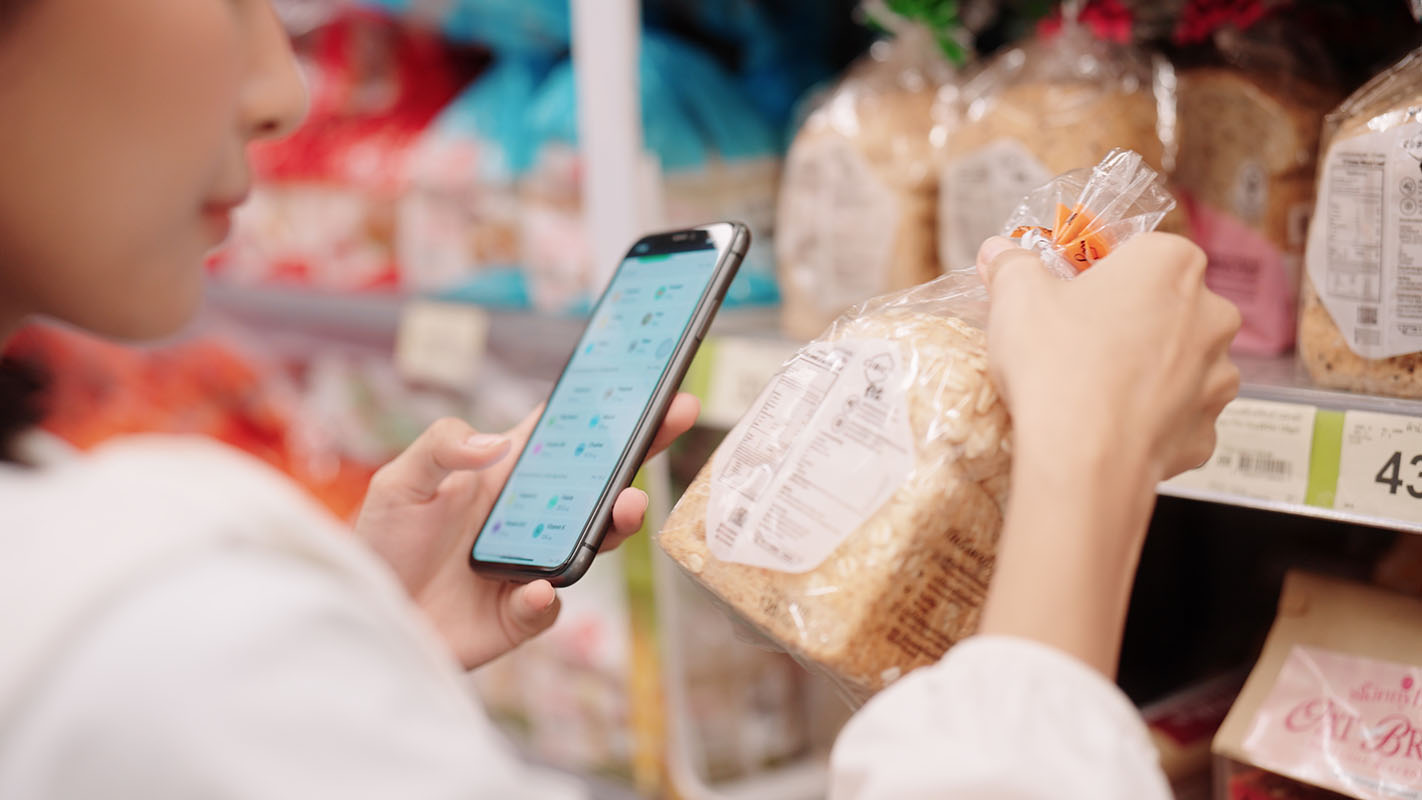
Once the food reaches the store, consumers can scan a QR code to see the complete history of the produce—where it was grown, how it was cultivated and whether it met certification standards.
“By combining real-time monitoring with immutable records, we can finally bridge the gap between producers, regulators and consumers,” notes Khaled Salah, professor of computer information engineering at KU.
While implementing such a system involves additional costs; the potential benefits, such as enhanced trust, reduced fraud and improved operational efficiency, make it a promising investment. Energy-efficient blockchain models and open-source platforms can further reduce barriers to adoption.
“This framework is about more than technology: it ensures crops are grown sustainably, certified reliably and trusted by consumers,” says team member Mohammed Omar, professor and chair of the Management Science and Engineering department at KU. “It’s about creating confidence in the food we eat.”
Reference
Hasan, H.R., Musamih, A., Salah, K., Jayaraman, R., Omar, M., Arshad, J., & Boscovic, D. Smart agriculture assurance: IoT and blockchain for trusted sustainable produce. Comput. Electron. Agric., 224, 109184, 2024. | Article