
Tiny diamonds have surprising immune boosting powers
Valued for their ability to transport drugs deep within the body, nanodiamonds can also directly stimulate the cells that fight cancer.
Tiny diamonds that are small enough to pass through cell membranes and circulate in the blood, yet large enough to carry drug molecules on their surface, are attracting huge interest in medicine.
These nanodiamonds share many of the properties of their larger counterparts, including chemical stability and biocompatibility, making them alluring candidates for drug delivery, imaging and biosensing.
“Since nanodiamonds are increasingly being considered for the transport of drugs and vaccines, they should be tested not only for their safety profile but also for their ability to elicit functional immune responses.”
Lucia Gemma Delogu
A multinational team of researchers from Khalifa University, the Karolinska Institute in Sweden, and the University of Padua in Italy has discovered a new property of the gems. In the lab, nanodiamonds boost the production of a type of immune cell that helps fight viruses and cancer cells.
“Since nanodiamonds are increasingly being considered for the transport of drugs and vaccines, they should be tested not only for their safety profile but also for their ability to elicit functional immune responses,” says Lucia Gemma Delogu, Associate Professor of Biological Sciences at Khalifa University.
Nanodiamonds can be chemically modified or ‘functionalized’ by attaching chemical groups to their surfaces to improve biocompatibility or for specific applications. The team showed that peripheral blood mononuclear cells, a type of adult human immune cell, showed no ill effects when exposed to nanodiamonds with amino, carboxyl or polyethylene glycol groups attached to their surfaces
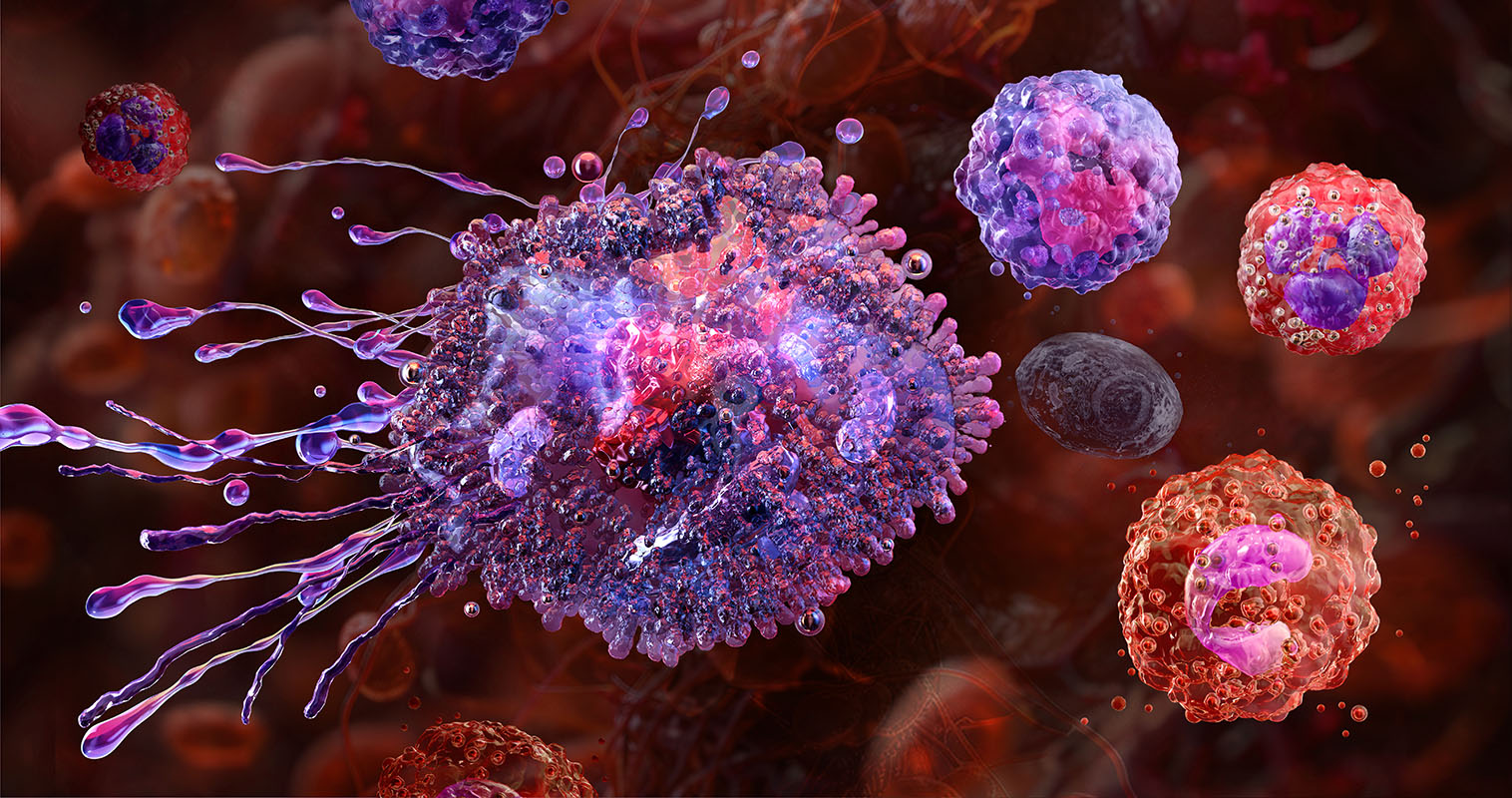
“In addition to being well tolerated, the nanodiamonds increased the number of plasmacytoid dendritic cells,” says Delogu. These immune cells produce type I interferons that help the immune system recognize and attack viruses and cancer cells. Nanodiamonds are sensed by the immune system as foreign, triggering a response similar to that seen in viral infections, she explains.
This response did not occur with another nanoparticle, titanium dioxide. It also varied according to the chemical group attached to the nanodiamond surface, giving researchers a way to fine tune the immune response. “PEGylation, the attachment of polyethylene glycol, can diminish the stimulatory effect to offer a tunable platform for many biomedical applications,” says Delogu.
One proposed application of the immune-activating properties of nanodiamonds is in cancer therapy. They could enhance the efficacy and duration of cancer vaccine induced activity, Delogu says. Adjuvants are commonly used in vaccines to enhance the immune response. “[Our] findings introduce possibilities for new types of immunotherapeutic uses where cell activation combined with tumor-specific targeting can be as critical as direct tumor targeting,” Delogu explains.
Planned future work includes testing nanodiamonds’ immunostimulatory properties in animal models and refining functionalization of the nanodiamond surfaces to fine-tune effects on the immune system.
“Although cost and manufacturing may present hurdles, particularly for precisely functionalized nanodiamonds, the potential benefits in applications such as cancer immunotherapy make them worth pursuing,” says Delogu.
Reference
Malina,T., Kaur, J., Martin, S., Gallud, A., Katayama, S., Gazzi, A., Orecchioni, M., Petr, M., Srejber, M., Haag, L., Hamawandi, B., Toprak, M.S., Kere, J., Delogu, L.G. & Fadeel, B. Nanodiamonds interact with primary human macrophages and dendritic cells evoking a vigorous interferon response. ACS Nano, 19, 19057-19079, 2025. | Article