Making microgrids stable and affordable
Adding a cost-effective control framework makes microgrids less vulnerable to blackouts.
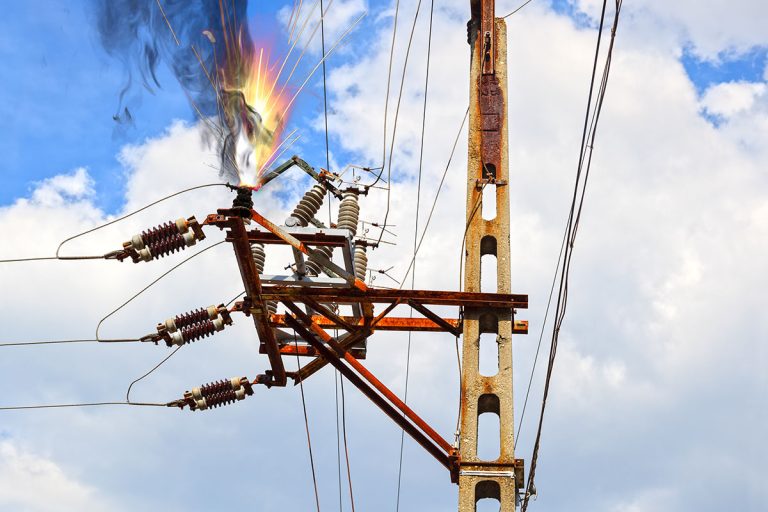
Widespread power outages in Spain and Portugal in April 2025 served as a stark reminder that even in high-income countries with interconnected power grids, power supply cannot be taken for granted. For many other parts of the world, this lack of reliability is an everyday problem.
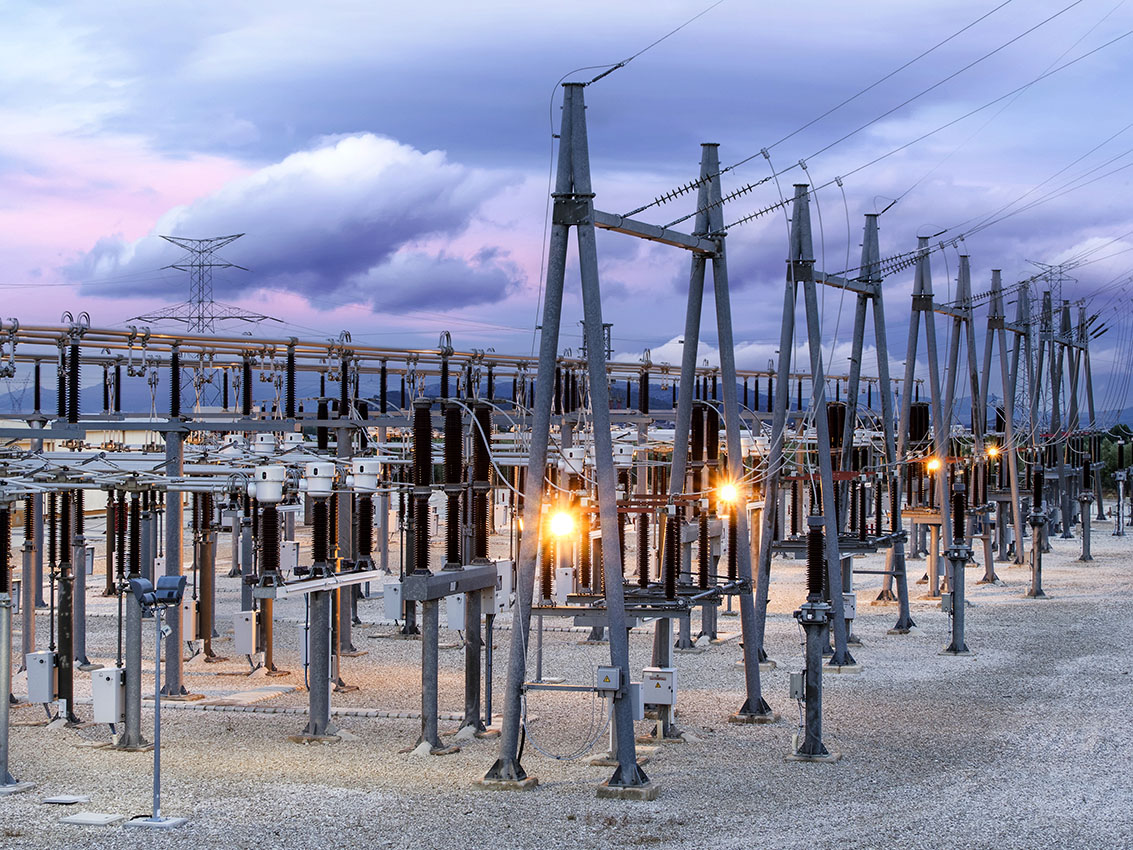
One promising solution is microgrids. These localized, self-sufficient energy systems operate independently of the main, centralized power grid; often by integrating renewable energy sources and energy storage systems. But it’s not that simple. Keeping these ‘islanded’ power grids running at stable voltage and frequency is a major challenge.
Professor Ahmed Al-Durra and his colleagues at Khalifa University’s Advanced Power and Energy Center have developed a decentralized control framework to ensure stable, communication free and economically optimal operation of islanded microgrids without compromising performance or cost efficiency.
“In the long term, our decentralized control framework can enable intelligent, self-optimizing microgrids for reliable, low-cost, and sustainable energy systems.”
Ahmed Al-Durra
Why does this matter? Most appliances need a specific frequency of 50 or 60 Hertz depending on the country. Large power grids maintain this by relying on synchronous generators that convert mechanical power into electricity at a constant frequency and voltage, providing the system with inertia to help ensure a stable power supply.
But renewable sources such as wind or solar typically connect to the grid through interface schemes that significantly curtail the overall system inertia. This means that a small sudden change in load or generation can cause the frequency in an islanded microgrid to drop or surge very rapidly.
“Effective frequency control is essential to maintain the balance between power generation and demand, ensuring system stability and reliability,” explains Al-Durra. “Large frequency deviations can lead to operational instability and equipment malfunction.”
One solution is using so-called virtual synchronous machines (VSMs). These advanced systems mimic the stabilizing characteristics of conventional generators such as gas turbines or diesel engines. In addition, they can quickly ramp power up or down to counter sudden changes, helping maintain stability.
But stability isn’t the only goal here, microgrids need to operate economically, using all available electric power generation units in the most cost-efficient way. Achieving this economic dispatch and stability at the same time can be a challenge.
Al-Durra’s team has proposed a decentralized control framework for dispatchable VSMs that simultaneously achieves economic dispatch, frequency restoration and stability enhancement in autonomous microgrids.
“Unlike previous studies that either restored frequency or minimized generation cost separately, the proposed approach integrates both of these within a communication-free structure,” says Al-Durra, “in the long term, it can enable intelligent, self-optimizing microgrids for reliable, low-cost and sustainable energy systems.”
Reference
Sati, E.S.; Al-Durra, A.; Zeineldin, H.H.; El-Fouly, T.H.M. and El-Saadany, E.F., Decentralized frequency restoration and stability enhancement for virtual synchronous machines at economic dispatch in islanded microgrid. Applied Energy, 377, 124544, 2025. | Article