
The kindness curriculum
A curated series of educational cartoons gives children the emotional intelligence they need to resist hate and bullying, and counter extremism in society.
In a world where emotional intelligence is increasingly seen as a shield against many risks, from bullying to radicalization, a team of researchers is turning to an unexpected ally: cartoons.
Developing emotional awareness at an early age can foster healthier, more resilient development through adolescence and into adulthood. A capacity to empathize and regulate emotions can help curb disruptive, anti-social behaviors such as bullying and aggression. Globally, emotional intelligence is even being woven into counter-terrorism programs, recognized as a tool for preventing extremist ideologies from taking root.
Sociologist Glenn Muschert, from Khalifa University, together with Faryal Razzaq of the Karachi School of Business and Leadership in Pakistan and co-workers, has developed a set of educational tools aimed at enhancing emotional awareness and empathy in primary school children. The educational program includes a specially designed cartoon series and classroom guides to facilitate discussion and encourage kinder behavior.
“We identified a gap in how emotional intelligence is taught to young children, especially in regions affected by extremism,” says Muschert. “Most interventions target older youth groups, yet early education shapes foundational behaviors.”
“I hope that policymakers and educators will see that emotional education isn’t a luxury, it’s essential.”
Glenn Muschert
He explains that it is during our primary school years that empathy and emotional awareness begin to take root. “If we can nurture these traits early, we stand a better chance of preventing harmful behaviors later,” Muschert says.
The team curated their cartoon series with input from psychologists and educators to ensure that they accurately portrayed core emotional intelligence themes such as empathy, self-awareness and emotional regulation through the cartoons’ plotlines. The stories were built around everyday scenarios experienced by children in school, including bullying and low-level aggression.
“We used relatable characters and simple storylines to show how empathy can resolve conflict,” says Muschert.
The program was piloted at two primary schools in Pakistan’s Rawalpindi/Islamabad region. Teachers received full training and guides on how to use the videos and integrate them into classroom learning. After watching each cartoon, children completed worksheets and had classroom discussions that helped them to reflect on their feelings. This encouraged them to practice awareness and kindness in situations that they encountered in their daily lives.
“The most striking result was how quickly children grasped the concept of empathy,” says Muschert.
Before watching the cartoons, fewer than 1% of the children said they knew the term ‘empathy’. After completing the program, 97.5% of the children understood what empathy entailed and why it was important for themselves and for others.
“This shows just how powerful creative learning can be,” says Muschert, whose pilot study offers a scalable model for integrating emotional education into school curricula. “In this way, our findings can be transferred to the United Arab Emirates and the wider Middle East and North Africa region,” he says.
Reinforcing the digital shield
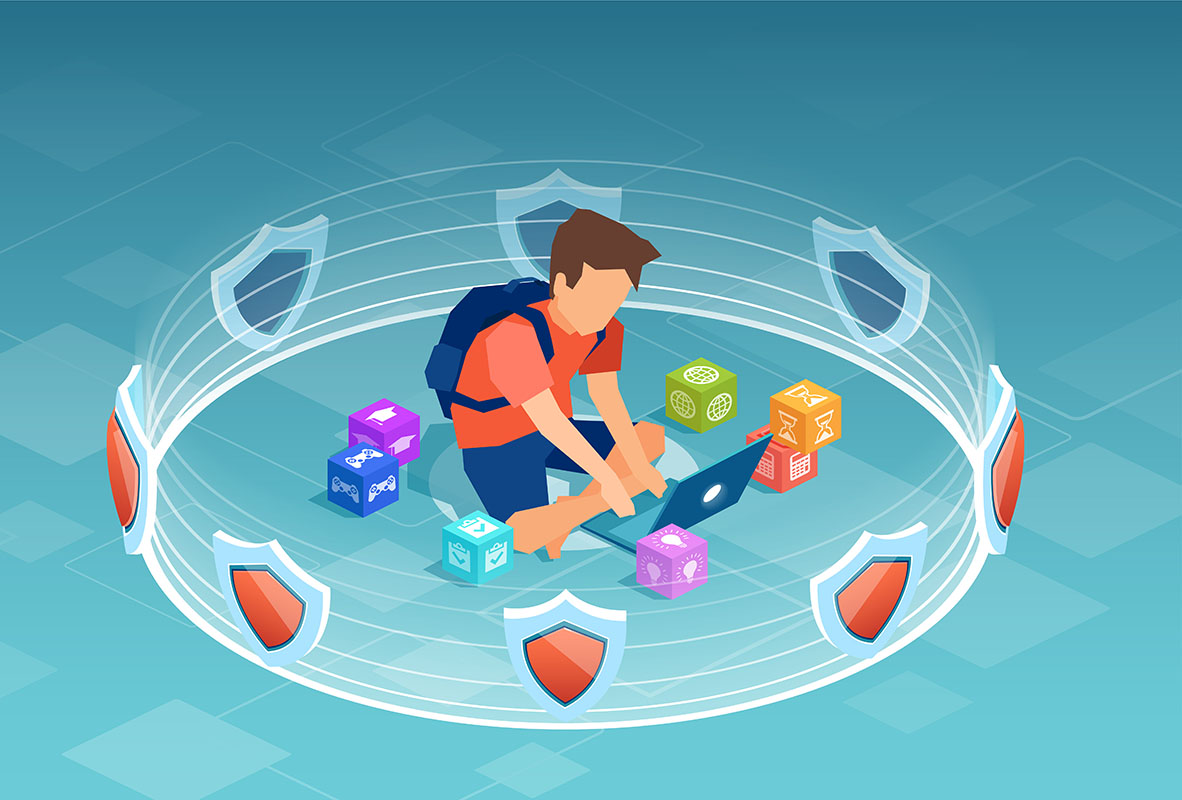
The UAE government is investing in the development of a digital shield to protect the future of its young people. But policymakers also recognize the importance of fostering resilience from a young age across the UAE’s population.
“Our approach aligns well with regional goals to build emotional resilience and counter extremism in future generations,” says Muschert. “It also complements the UAE’s digital shield by equipping children with emotional tools to navigate online and offline challenges.”
No matter how many protective features are put in place, children and young people will still be able to access online content that may be inappropriate, or, in extreme circumstances, radicalizing. Muschert and Razzaq’s approach offers a way of building empathy and inner strength before external threats arise, so that young people can resist the lures of harmful content.
“I hope that policymakers and educators will see that emotional education isn’t a luxury, it’s essential,” says Muschert. “Even a short, well-designed program can make a meaningful difference in how children relate to themselves and others.”
The team plans to expand its study across more schools and regions, and to develop an expanded curriculum with more content and cartoons.
“Long-term tracking would help us understand how these early interventions shape behavior, so hopefully we can implement a way of monitoring children’s progress as they move through school,” says Muschert.
Reference
Razzaq, F., Siddiqui, A., Ashfaq, S., Ashfaq, M.B., & Muschert, G. Assessing the impact of a video literacy program on emotional intelligence and resilience to extremism in primary school children. Nature Humanities and Social Sciences Communications 11:1507 (2024) | Article