Powering a safer nuclear future
From the Stone Age until today, every human leap has been driven by advances in materials. Captivated by this link between materials and progress, Akram AlFantazi has dedicated his career to exploring the potential of new materials. Now, he’s channeling his broad scientific expertise into research on materials for nuclear power plants.
What originally drew you to the nuclear energy sector?
With the UAE investing heavily in nuclear energy as part of its clean energy future, I see my work as a meaningful contribution to industry and society. At the ENTC—a collaborative effort between Khalifa University, the Emirates Nuclear Energy Corporation (ENEC) and the Federal Authority for Nuclear Regulation (FANR)— we ensure that our projects address real-world challenges. ENTC’s structure and vision make the transition from academic research to application very natural.

What are the biggest challenges in developing potential materials for nuclear power plants, especially in the UAE?
One key challenge is material degradation, particularly corrosion. Nuclear power plants already operate under aggressive temperature and pressure, but in the UAE, additional environmental factors come into play. Facilities near the sea face exposure to saltwater, humidity and high temperatures, all of which can create extra stress on materials. Our work focuses on selecting the right materials, monitor their aging and develop strategies to mitigate corrosion.
Which KU research projects are you most excited about?
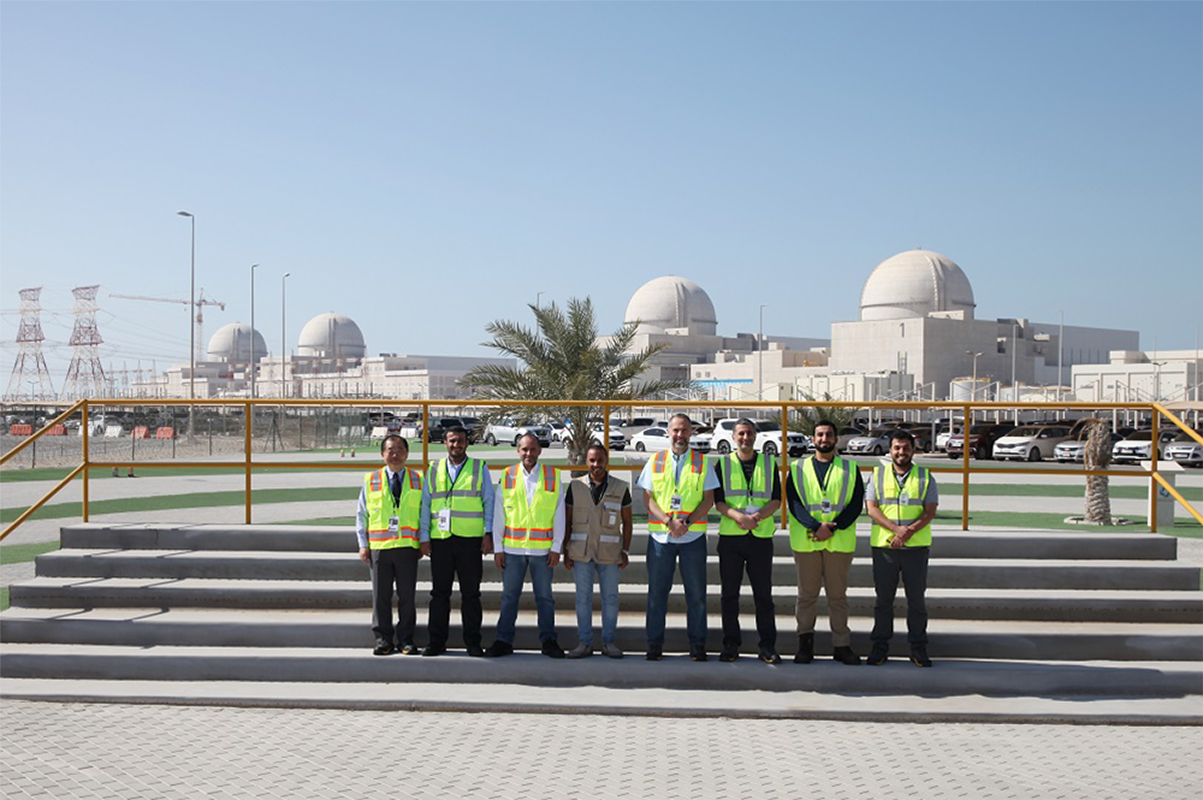
We’re making meaningful strides toward safer and long-lasting nuclear energy systems. For example, we’ve developed nanoporous oxide coatings for stainless steel and titanium components of the Barakah Nuclear Power Plant (BNPP) to enhance corrosion and wear resistance. This process is affordable, scalable and compatible with existing nuclear cooling systems.
We’ve also created a new protective cladding layer made of chromium and niobium for the zirconium alloy tubes that hold nuclear fuel. This innovation makes them more resistant under extreme accidental conditions. Early tests and computer models show that the coated tubes can withstand high heat and steam better than the uncoated ones.
What opportunities does nuclear energy in the UAE offer young scientists and engineers?
The UAE’s nuclear industry is still in its early stages, but the country’s clear commitment to expanding nuclear energy as part of its clean energy strategy opens up tremendous opportunities for young Emirati scientists and engineers to be part of this transformation.
How do you envision the future of nuclear materials research evolving over the next decade?
AI and machine learning are unlocking powerful new possibilities to accelerate the development of stronger, more resilient materials. over the next decade, this could lead to breakthroughs such as radiation-resistant alloys and 3D-printed components tailored for the next generation reactors, including small modular designs. Ultimately, the goal is to create nuclear power plants that are safer, longer lasting and more sustainable.