
From desert to table: Saving fresh food from going to waste
A data-driven initiative aims to cut postharvest food loss through smart farming, cooling innovation, and training farmers.
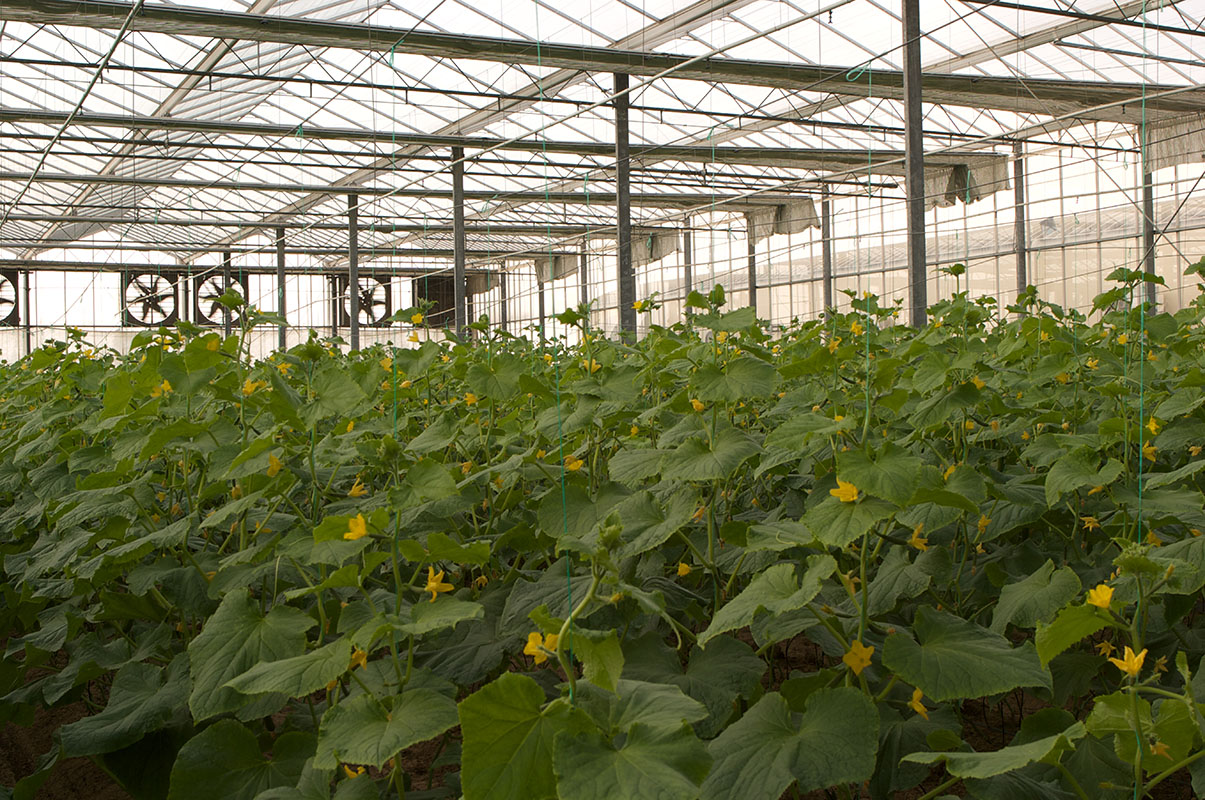
In a region where every drop of water is precious, a crop revolution is taking place. Farmers in Abu Dhabi are turning to smart, low-cost technology to save tons of fresh food from going to waste. Think juicy tomatoes, fragrant strawberry, cucumber, figs and even crops you’d never imagine could grow in the desert, like avocados and passion fruit, thriving in a place where abundance seemed impossible. This is the story of how Khalifa University scientists are developing cutting-edge tools to secure the UAE’s food future, one small farm at a time.
But these farms aren’t just growing food—they’re growing solutions. As part of a bold effort led by KU and the Abu Dhabi Agriculture and Food Safety Authority (ADAFSA), they serve as living labs tackling one of agriculture’s most persistent challenges: postharvest food waste. Each year, a staggering portion of fresh produce is lost between the farm and the table—damaged in transit, spoiled during storage, or simply wasted due to inefficient systems. In the UAE, where water is scarce and cooling is costly, the stakes are even higher. Here, every cucumber counts.
“The environment here limits what you can grow, but not what you can achieve.”
Nawaf Almoosa
“The environment here limits what you can grow, but not what you can achieve,” says Dr. Nawaf Almoosa, Director of the Emirates ICT Innovation Centre (EBTIC) at Khalifa University. “Our job is to help farmers—especially small-scale, non-commercial farmers—make the most of what they produce.”
Scattered across Abu Dhabi, from the fringes of Al Ain to the capital’s outskirts, these farms are often modest family-run plots, but they hold great potential. Some are granted as agricultural land, tended by hobbyists; others sell produce in small quantities. Either way, they typically lack access to cutting-edge farming tools that could help them thrive in the harsh desert climate.
Farms of the future
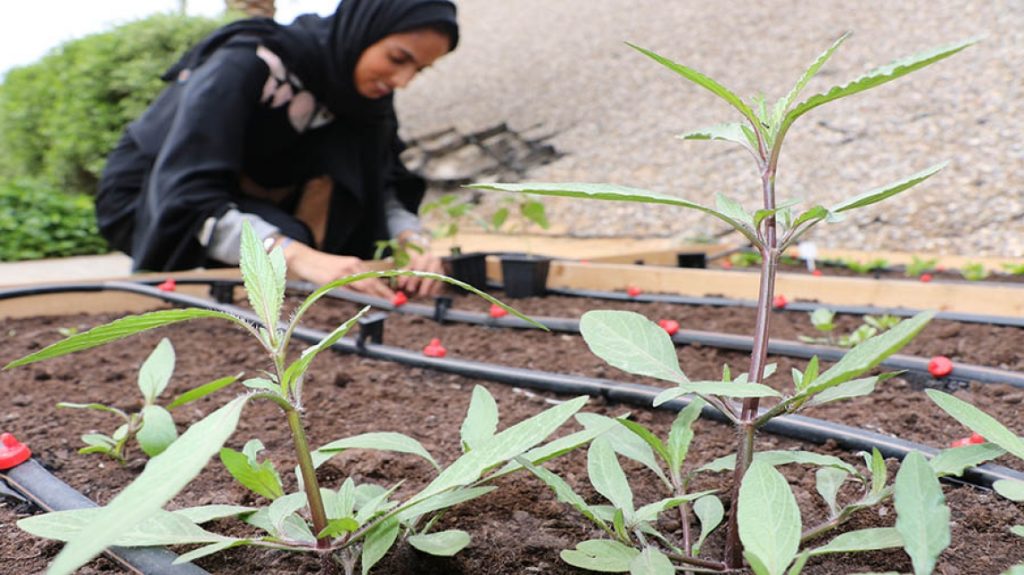
To bridge this technology gap, the Modern Agricultural Technologies program was launched—an initiative funded by ADAFSA and executed in collaboration with international experts. From pre-harvest precision farming to smarter handling after crops are picked, the program covers every stage of farming cycle, promoting environmentally conscious farming practices that reduce water and energy use.
Collaborators include researchers from Wageningen University, in the Netherlands, and a consortium of U.S. universities—University of Georgia, UC Davis, and Kansas State University.
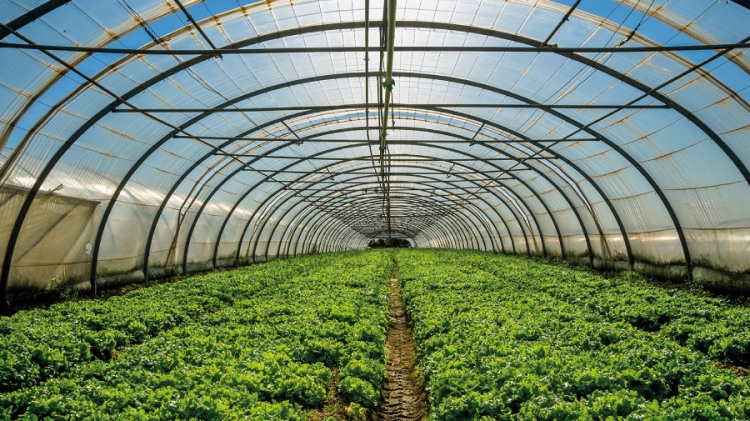
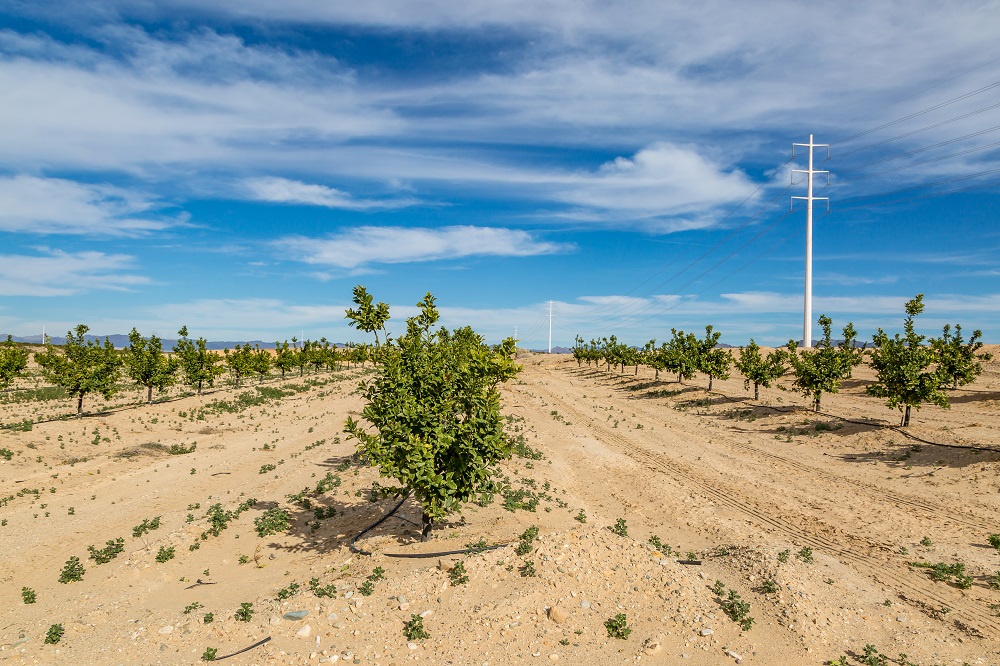
When the team first visited local farms, they were struck by both the potential and the problems. “We saw greenhouses sitting idle,” recalls Sara Alshamsi, a research associate at EBTIC and the technical project manager for the Agriculture 4.0 project. “Expensive fertigation systems had been installed, but were abandoned after a few weeks.” But the team was also amazed by what was growing—avocados, strawberries, figs, mangos, even papayas—all thriving in a landscape many assume to be barren. As Almoosa reflects, “You’d be surprised what you can grow in the desert.”
Cool solutions, affordable prices
Growing crops is only half the challenge. Keeping them fresh, especially through the UAE’s sweltering summers, is an entirely different struggle. Cooling alone consumes vast amounts of energy, and traditional systems are not always practical for small-scale farmers.
That’s where the project’s research into low-cost, smart technology comes in. The team began developing systems based on environmental sensors that could monitor temperature, humidity, soil moisture and other vital conditions in real-time. These tools help farmers fine-tune their operations, reduce spoilage, and ultimately increase yields.
IBut industrial-grade sensors were prohibitively expensive, so, researchers turned to readily available cost-effective sensors, testing them to build reliable, affordable systems suitable for widespread use.
The next hurdle was interoperability. Different sensors came from different vendors and operated on different platforms—some using Wi-Fi, others using Zigbee, LoRa, or wired connections. Kumar Padmanabh, a senior researcher on the project, and his colleagues, tackled this by designing a unified platform capable of integrating all of them. This allowed farms to collect and analyze data from a wide range of devices in one place, making the system more user-friendly and efficient.
One of the most practical solutions came through understanding sunlight. Rather than installing expensive soil sensors throughout an entire farm to guide irrigation, the team used sensors that measure sunlight to predict how quickly water would evaporate. By linking irrigation to sunlight intensity, they were able to control water use more intelligently, reducing both waste and cost.
So far, these technologies are being trialed in 27 farms across Abu Dhabi. Early results are promising. In one experiment, the team compared a manual watering and fertilization system with an automated system inside the same greenhouse. The automated side produced healthier, greener plants and yielded crops significantly earlier than its manually managed counterpart.
They also recorded a 14 %drop in overall energy consumption, particularly from cooling, in greenhouses equipped with their systems. Additional features like leakage detection are helping save water—critical in a region where every drop matters.
But the project isn’t just about numbers. It’s about making the tools usable and the changes sustainable. “Our goal is to make farmers see the benefit for themselves,” says Almoosa. “If the technology improves yield, reduces effort, and cuts costs—they’ll adopt it.”
To make this happen, the team is producing custom training manuals, conducting in-field workshops, and working closely with ADAFSA to offer farmers not just the tools, but the know-how to keep using them effectively.
From Abu Dhabi to the rest of the world
With climate change already making extreme weather more common in many parts of the world, what works in Abu Dhabi’s deserts could potentially be adapted to other regions facing heat, salinity, or water scarcity.
That’s why the team’s work includes updating Abu Dhabi’s official postharvest handling manuals for every crop that can be grown and traded in the Emirate. With guidance from international experts, these manuals are paired with a targeted series of farmer trainings that aim to reduce losses and make the entire agricultural system more efficient.
The program runs through 2026, but the researchers are already looking beyond the lab. Their hope is to move from pilot trials to full-scale commercialization, making these smart, desert-tested technologies available to farmers everywhere.